
Meeting Quality and Demand: The Model 9000 Extruder
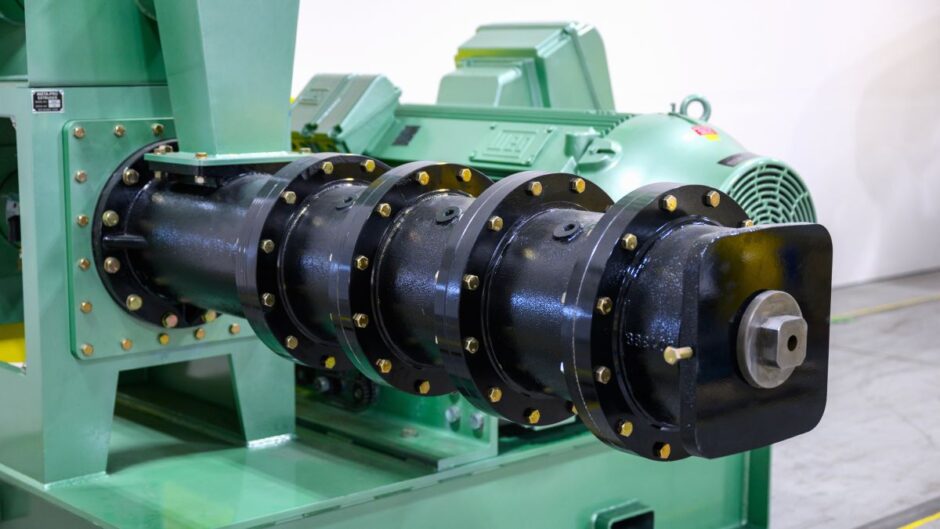
As integrators and high-volume feed mills expand, they need processing systems that can keep pace without sacrificing nutritional quality. Initially debuting in 2020, Insta-Pro’s Model 9000 high-shear dry extruder has continued to answer the call for a higher-capacity solution built with the same nutritional consistency and longevity as previous extruder models.
Designed in response to integrators and large-scale producers wanting to make our extruded ingredients at higher volumes, the 9000 delivers on that goal, with one machine capable of 4 tons per hour (TPH), while requiring significantly less space than multiple smaller model extruders. Instead of scaling production lines with additional equipment, we designed the 9000 to consolidate more production into a single system. Compared to previous layout designs for 4 TPH systems, which consisted of two sets of two paired 2000 extruders, a single 9000 extruder in its place reduces floor space requirements by 60% and total cubic volume by 54%. That kind of footprint reduction creates new opportunities for facility optimization and future growth with ease.

fig. 1 – arial and side view comparison of Model 9000 extruder and four Model 2000 extruders
The financial advantages of the improved capacity also make a difference. A single 9000 extruder provides an 11% lower purchase price than a comparable multi-machine setup, along with 1/4 the installation costs. Fewer machines reduce complexity to streamline workflows, simplify maintenance routines, and reduce labor demands.
With our nutrition-first mindset, the 9000 was specifically designed to keep product quality at our high standards, even at higher throughput. This ensures consistency across the board, no matter the capacity customers want to produce. Operations using our 2000 extruders also have peace of mind knowing they won’t need to compromise on quality when choosing to expand. When an integrator makes and uses ExPress® soy in their broiler diet formulations instead of conventional soymeal and oil, feed costs can decrease by as much as $14 per ton (fig. 2).
For large-scale operations, that can add up to millions of dollars in annual savings, supporting a payback in 2-5 years. In a margin-sensitive industry, improvements like these make a measurable difference over time.

fig. 2 – Diet cost comparison of solvent soybean meal and ExPress® soymeal *Diet cost breakdowns subject to change, consult a nutritionist for the latest cost comparison.
The 9000 extruder represents more than just increased throughput. It offers a way to improve efficiency, reduce costs, and maintain consistent nutritional outcomes, all within a more compact, streamlined design. The innovation hasn’t stopped there, as our teams are diligently working to expand the 9000’s flexibility in the future with the addition of a side-feeder, preconditioner, and operating parameters for cereal grains and other oilseeds. Please reach out to our team if you’d like more information about our equipment.