
How Oil Pressing Works and How Extrusion Helps
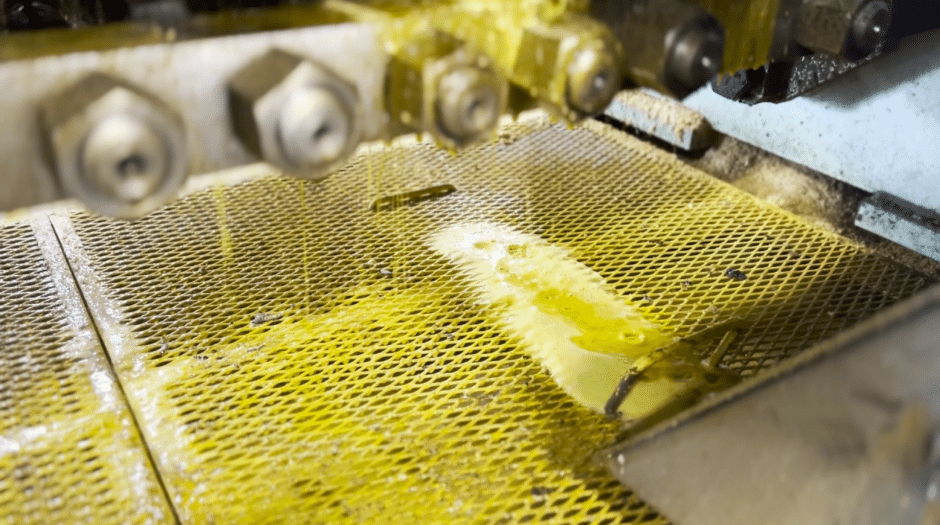
Oil presses have been used for decades to recover valuable vegetable oils, but when paired with High-Shear Dry Extrusion (HSDE), they become even more efficient. Together, these technologies produce high-quality soybean oil and a nutrient-rich soybean meal without the need for hexane or other chemical solvents.
Let’s answer some of the most frequently asked questions about mechanical oil extraction.
How Does a Mechanical Oil Press Work?
A mechanical oil press extracts oil by applying continuous pressure to prepared oilseeds. Inside the press, a rotating screw conveys the material through a narrowing chamber, where increasing pressure squeezes oil from the soybean.
As pressure builds:
- Oil is forced through small openings in the press barrel.
- The remaining solids are compressed into a soybean meal cake.
- The oil and cake are collected separately for further handling.
Unlike solvent extraction, mechanical pressing relies entirely on physical force to separate the oil from the solids.
Why Is High-Shear Dry Extrusion Important Before Pressing?
Raw soybeans are difficult to press efficiently because the oil is trapped within intact plant cells.
High-shear dry extrusion prepares the soybeans by:
- Rupturing cell walls to more effectively release oil within oilseed.
- Deactivating anti-nutritional factors for improved nutrient availability.
- Reducing moisture to optimal levels for product stability.
Without proper preparation, oil recovery decreases and meal quality can become inconsistent. HSDE ensures the soybeans enter the press in the ideal condition for efficient oil extraction.
How Much Oil Can Be Recovered?
Whole soybeans typically contain approximately 18–20% oil, although this varies depending on variety and growing conditions.
Mechanical oil presses remove a significant portion of that oil while intentionally leaving about 6–8% residual oil in the soybean meal. This remaining oil is one of the defining characteristics of ExPress® soy meal, contributing additional dietary energy that can benefit livestock and poultry diets.
The exact amount of oil recovered depends on several factors, including:
- Soybean quality.
- Proper extrusion before pressing.
- Press settings and operating conditions.
- Equipment maintenance.
When these variables are optimized, processors achieve consistent oil recovery and meal quality.
Why Doesn’t Mechanical Pressing Remove All of the Oil?
Unlike solvent extraction, mechanical pressing is designed to balance oil recovery with meal quality.
Removing every possible drop of oil would require additional processing steps or chemical solvents. Instead, the pressing side of the ExPress® process leaves a controlled amount of residual oil in the meal, increasing its energy value while still recovering a high-quality soybean oil.
For many feed manufacturers, this creates a valuable advantage by combining protein and energy in a single ingredient.
What Are the Benefits of Solvent-Free Oil Extraction?
Mechanical oil extraction offers several advantages over traditional solvent extraction.
No Chemical Solvents
The process eliminates the need for hexane during oil separation, reducing reliance on chemical extraction methods.
Simplified Processing
Mechanical systems require fewer processing steps than conventional solvent extraction facilities, making them well suited for small- to medium-scale processors and integrated feed operations.
Valuable Co-Products
Processors produce two marketable products from every soybean:
- High-quality mechanically extracted soybean oil.
- ExPress® soy meal with valuable residual oil.
Greater Processing Flexibility
Mechanical systems can often be installed closer to where soybeans are grown or feed is manufactured, allowing processors to create value locally while reducing transportation of finished ingredients.
What Can Processors Do with the Oil?
Mechanically extracted soybean oil has numerous commercial applications.
Depending on the operation, the oil may be:
- Included directly in livestock feed.
- Refined for food-grade applications.
- Used in biodiesel production.
- Sold into industrial markets.
- Marketed as an additional revenue stream alongside soybean meal.
The ability to produce both meal and oil allows processors to diversify their income while maximizing the value of every bushel of soybeans.
What Factors Affect Oil Press Performance?
Consistent oil recovery depends on more than just the press itself. Several factors influence performance, including:
- Soybean moisture content.
- Proper extrusion temperature.
- Feed rate through the press.
- Screw and barrel wear.
- Routine maintenance.
- Operator experience.
Monitoring these variables helps ensure maximum efficiency, consistent meal quality, and reliable oil production over time.
Is Mechanical Oil Extraction Right for Every Operation?
Mechanical oil extraction is particularly attractive for operations that want greater control over ingredient quality and feed costs.
It can be an excellent solution for:
- Integrated livestock producers.
- Commercial feed mills.
- Regional soybean processors.
- Producers seeking solvent-free processing.
- Businesses interested in capturing additional value from their soybean crop.
By processing soybeans on-site or closer to the point of use, many operations can reduce transportation costs while producing premium feed ingredients tailored to their nutritional goals.
Key Takeaway
Mechanical oil presses use pressure, not chemical solvents, to separate oil from soybeans. When combined with high-shear dry extrusion, they efficiently recover valuable soybean oil while producing ExPress® soy meal with approximately 6–8% residual oil. This unique combination gives processors a versatile system that creates two high-value products from a single raw ingredient, helping maximize both nutritional quality and economic return.