
Part 1 – Understanding Dust Hazards in Oilseed & Grain Processing
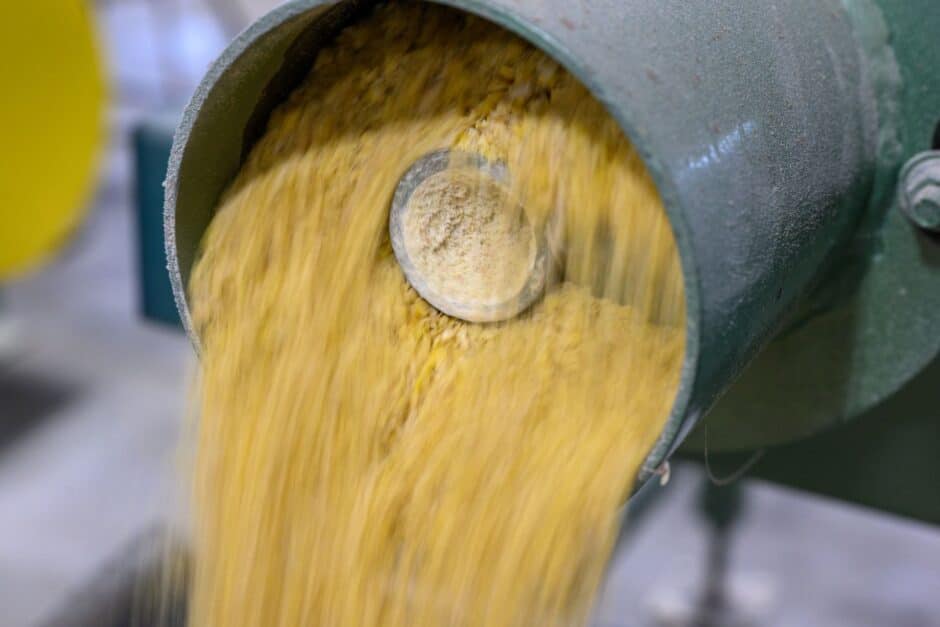
In grain and oilseed processing environments, some of the most serious risks aren’t always visible, like heavy machinery or electrical hazards. Grain dust can pose significant threats to both worker safety and facility integrity if not properly managed. While it’s easy to focus on the goals of the business, like efficiency and product quality, overlooking dust in your operation can have serious consequences.
When suspended in the air at the right concentration, it becomes highly combustible. A single spark in the wrong environment can trigger a dust explosion, causing severe damage to equipment, facilities, and, most importantly, your people.
Beyond explosion risk, prolonged exposure to grain dust can also impact worker health, contributing to respiratory issues and reduced air quality within the plant.
The challenge with dust is that it often builds gradually. Dust accumulation on surfaces, in overhead spaces, or inside equipment can go unnoticed until it becomes a serious hazard.
This dust is generated at multiple points during processing:
- Material handling and transfer points
- Grinding and size reduction
- Drying and conditioning
Each of these processing stages introduces opportunities for dust to become airborne or accumulate in areas that can lead to an incident inside a facility.
That means even a brief lapse in protocol, like welding on or near operating equipment or allowing smoking in restricted areas, can create the conditions for ignition. Your facility should have strict policies to:
- Prohibit smoking in and around processing areas.
- Restrict hot work like welding or cutting to designated times and controlled conditions.
- Require proper permits and safety checks before any maintenance involving heat or sparks is conducted.
In facilities where dust is present, eliminating ignition sources is one of the most effective ways to reduce the likelihood of an incident. On top of this, dust accumulation can also be mitigated through smart design and efficient equipment setup from the start.
While no system eliminates dust, the design of Insta-Pro’s high-shear dry extrusion systems can reduce opportunities for dust to escape into the plant environment. The core ExPress® equipment line is designed as a continuous, largely enclosed system where raw materials are conveyed, extruded, and pressed and/or cooled. Compared to more open or fragmented processing methods, this approach offers several advantages when it comes to dust management:
- Reduced exposure points: Material is contained within the system during critical stages of processing.
- Controlled environment: Moisture, temperature, and flow are managed, limiting conditions that contribute to excessive dust generation.
- Fewer transfer steps: A streamlined process reduces the number of times material is moved, which is a common source of dust release.
High-shear dry extrusion can contribute to improved dust control by reducing transfer points and containing key processing steps—but it must be paired with proper dust collection, housekeeping, and operator training to effectively mitigate risk.
In Part Two, we will discuss worst-case scenarios for improper dust management, as well as strategies for effective prevention.